
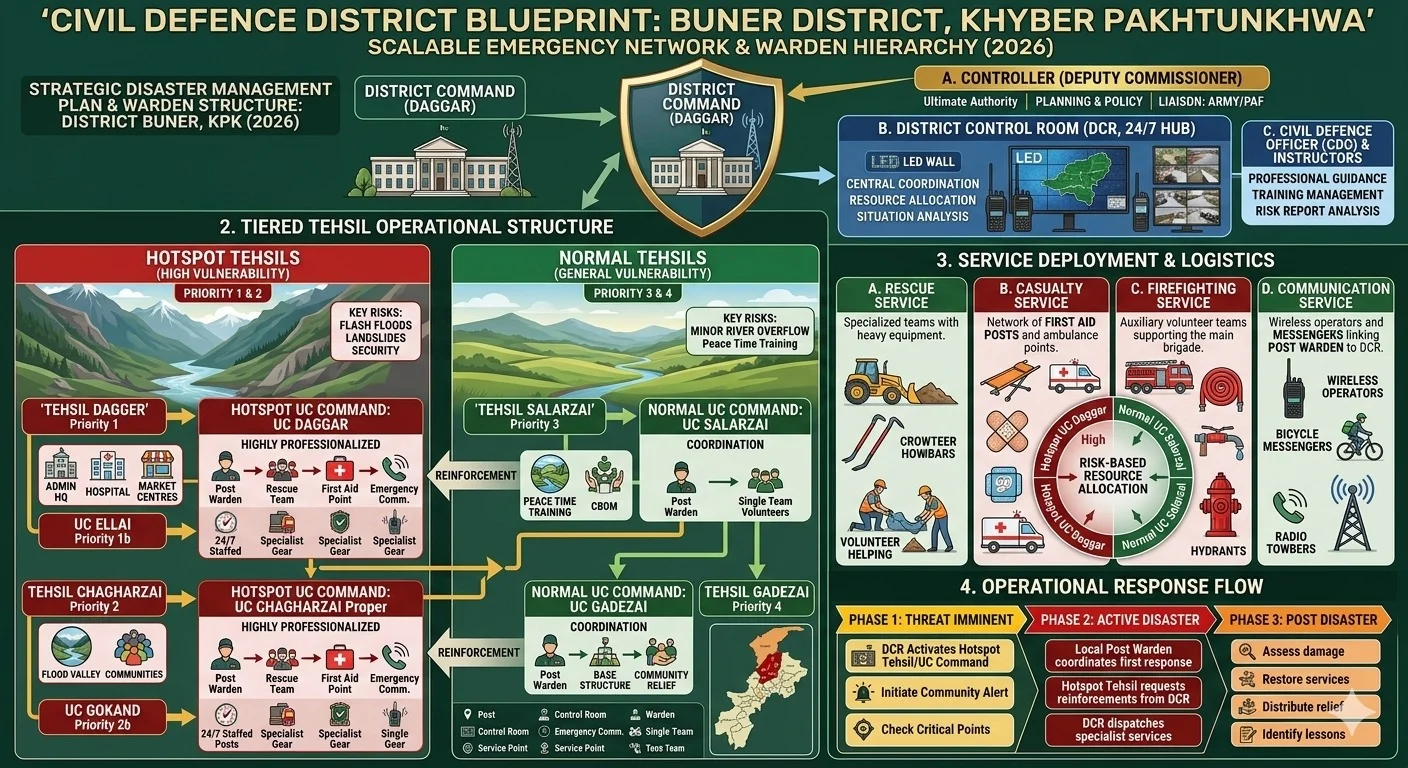
Training and preparedness form the foundation of an effective Civil Defence system. A well-structured organization is only as strong as the skills, readiness, and discipline of its volunteers.
The objective is to ensure that every volunteer is capable of responding confidently, acting decisively, and operating effectively under pressure during any emergency situation.
1. Purpose of Training
The primary goal of training is to develop volunteers who can:
- Understand and assess emergency situations accurately
- Respond calmly and avoid panic under pressure
- Make quick, life-saving decisions
- Work efficiently within a coordinated team structure
Core Principle:
“Training transforms ordinary individuals into capable emergency responders.”
2. Core Training Modules
Civil Defence training is structured into specialized modules to ensure comprehensive preparedness:
🚑 First Aid & Medical Response
- Immediate care for injured individuals
- CPR (Cardio Pulmonary Resuscitation) techniques
- Bleeding control and bandaging
- Management of shock and trauma
🔥 Fire Safety & Fire Fighting
- Identification of different types of fire
- Proper use of fire extinguishers
- Controlling small-scale fires
- Preventing fire spread
🛟 Rescue & Evacuation Techniques
- Safe evacuation procedures
- Carrying and handling injured persons
- Basic search and rescue operations
- Evacuation planning and execution
📡 Communication & Coordination
- Emergency communication protocols
- Following the chain of command
- Use of communication tools (wireless, signals)
- Team coordination during critical situations
🗺️ Disaster Awareness & Risk Management
- Response to floods, earthquakes, and air raids
- Hazard identification and risk assessment
- Planning safe routes and shelter locations
- Community awareness strategies
3. Practical Drills & Simulations
Training is incomplete without realistic practice. Civil Defence emphasizes hands-on learning through:
- Mock emergency scenarios
- Siren response exercises
- Fire and rescue simulations
- Full-scale evacuation drills
Training Insight:
“The more realistic the training, the more effective the response.”
4. Preparedness System (Always Ready)
Preparedness ensures that volunteers are ready to respond at any time.
This includes:
- Maintaining equipment in ready condition
- Following duty rosters and availability schedules
- Keeping updated knowledge of assigned areas
- Ensuring communication channels remain active
5. Mental & Physical Readiness
Effective response requires both mental strength and physical capability.
Key aspects include:
- Stress management under pressure
- Quick and rational decision-making
- Physical fitness and endurance
- Discipline and emotional control
6. Community Preparedness
Civil Defence is not limited to internal training—it also focuses on public awareness and community readiness.
Volunteers are responsible for:
- Educating the public about emergency procedures
- Conducting awareness campaigns
- Guiding citizens on:
- What to do when sirens sound
- Where to go during emergencies
- How to respond safely
Key Concept:
“A prepared community is a protected community.”
7. Continuous Training & Improvement
Training is an ongoing process, not a one-time activity.
Continuous improvement includes:
- Regular refresher courses
- Updated training based on new risks
- Performance evaluations after drills
- Learning from real emergency experiences
Conclusion
Training and preparedness ensure that Civil Defence operates as a reliable, disciplined, and highly effective emergency response system.
Through continuous learning, practical drills, and community engagement, volunteers are transformed into skilled responders capable of protecting lives and maintaining order in critical situations.
“Preparedness is the first line of defence.”
Join a trained network of Civil Defence volunteers protecting communities across Khyber Pakhtunkhwa.
