
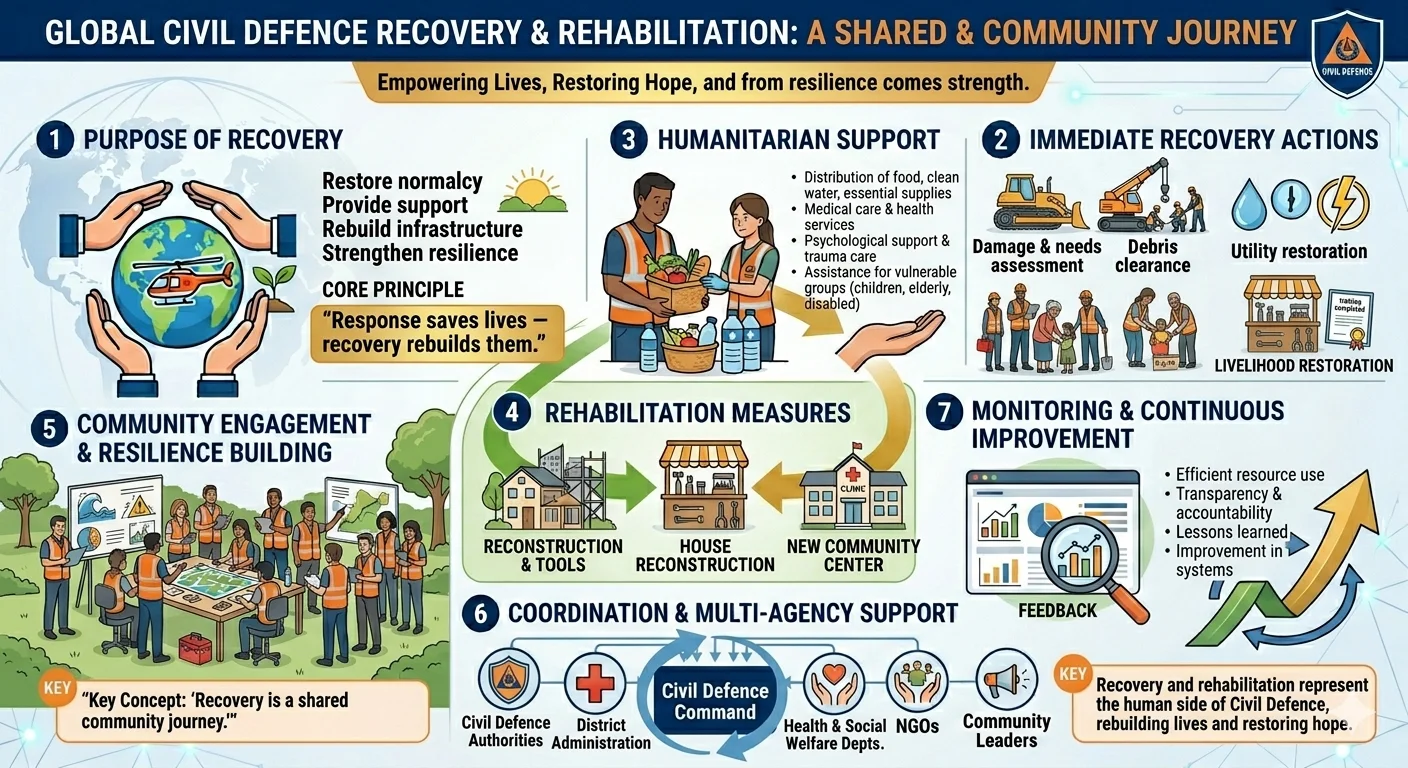
Empowering Lives, Restoring Hope, and Strengthening Resilience
Recovery and rehabilitation are critical phases of Civil Defence operations, focused on helping communities rebuild, recover, and return to normal life after a disaster. Beyond immediate response, this stage ensures that affected individuals receive sustained support, care, and opportunities to restore stability and dignity.
1. Purpose of Recovery & Rehabilitation
The primary goal is to:
- Restore normalcy in affected communities
- Provide support to displaced and affected individuals
- Rebuild infrastructure and essential services
- Strengthen resilience against future disasters
Core Principle:
“Response saves lives — recovery rebuilds them.”
2. Immediate Recovery Actions
Once the emergency phase is controlled, Civil Defence initiates:
- Damage and needs assessment
- Clearance of debris and hazardous materials
- Restoration of basic utilities (water, electricity, access routes)
- Establishment of temporary shelters
3. Humanitarian Support
A key priority is supporting affected populations:
- Distribution of food, clean water, and essential supplies
- Medical care and health services
- Psychological support and trauma care
- Assistance for vulnerable groups (children, elderly, disabled)
4. Rehabilitation Measures
Rehabilitation focuses on long-term recovery and rebuilding lives:
- Housing reconstruction and repair support
- Livelihood restoration programs
- Community infrastructure rebuilding
- Reintegration of displaced individuals
5. Community Engagement & Resilience Building
Recovery is not just about rebuilding structures—it’s about strengthening people and communities.
Key initiatives include:
- Community participation in rebuilding efforts
- Awareness programs for future preparedness
- Training in disaster risk reduction
- Promoting self-reliance and local leadership
6. Coordination & Multi-Agency Support
Effective recovery requires collaboration between:
- Civil Defence authorities
- District administration
- Health and social welfare departments
- Non-governmental organizations (NGOs)
- Community leaders
7. Monitoring & Continuous Improvement
Recovery efforts are continuously monitored to ensure:
- Efficient use of resources
- Transparency and accountability
- Lessons learned for future preparedness
- Improvement in disaster response systems
Conclusion
Recovery and rehabilitation represent the human side of Civil Defence, where the focus shifts from managing disasters to rebuilding lives and restoring hope.
Through structured support, coordinated efforts, and community involvement, Civil Defence ensures that affected populations emerge stronger, safer, and more resilient.
“From recovery comes resilience, and from resilience comes strength.”
Join a trained network of Civil Defence volunteers protecting communities across Khyber Pakhtunkhwa.
